
Dust is a common environmental and workplace challenge across many parts of Australia, particularly in regions where construction, mining, agriculture, quarrying, land development, and transport activities disturb dry soil and other fine materials. Effective Dust Suppression Solutions in South Australia and appropriate dust control strategies in Queensland can help reduce the movement of fine particles, improve air quality, and support safer working environments.
Why Dust Control Is Important?
When soil, sand, aggregate, or other loose materials are disturbed, fine particles can become airborne. Wind, vehicle movement, excavation, crushing, loading, and other industrial activities may all contribute to dust generation. Depending on the conditions, these airborne particles can travel beyond the immediate work area.
Managing dust is important for several reasons. Airborne dust can reduce visibility, affect nearby communities, settle on vegetation and infrastructure, and create operational challenges at work sites. In some environments, controlling dust particles may also be necessary to support workplace health and environmental management requirements.
The type of dust control method required depends on several factors, including the size of the site, the material being managed, weather conditions, traffic levels, and the duration of the activity.
Dust Suppression Solutions in South Australia
South Australia experiences a wide range of climatic conditions, including dry and semi-arid environments where exposed soil can become highly susceptible to wind erosion. Construction projects, unsealed roads, mining operations, and infrastructure development can all generate dust when surface materials are disturbed.
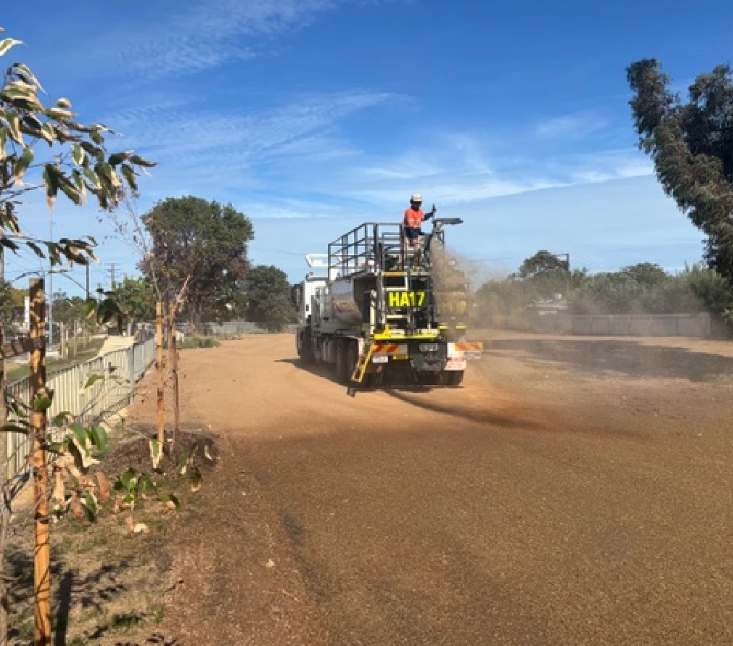
Common Dust Suppression Solutions in South Australia include water application, soil stabilisation, surface binding products, vegetation establishment, and physical barriers. Water can provide immediate but often temporary dust reduction, particularly during active construction or earthmoving activities. However, repeated water use may not always be practical or sustainable for long-term dust management.
Surface stabilisation methods can help improve the resistance of exposed materials to wind and vehicle disturbance. The appropriate approach depends on the characteristics of the soil and the expected level of site activity. In some cases, establishing vegetation or applying erosion-control measures can provide longer-term protection for exposed land.
Dust Control Solutions in Queensland
Queensland also has diverse landscapes and industries where dust management is an important consideration. Dry periods, large construction projects, mining activities, agricultural operations, and transport routes can all contribute to airborne dust generation.
Effective dust control solutions in Queensland often require an approach that considers local weather patterns and seasonal conditions. Heavy rainfall may affect some dust-control treatments, while extended dry periods can increase the need for regular monitoring and surface management.
Dust control may involve a combination of methods, such as reducing vehicle speeds on unsealed roads, applying water or other suitable suppressants, covering stockpiles, and stabilising exposed surfaces. Regular inspections can help identify areas where dust is most likely to be generated and allow control measures to be adjusted when site conditions change.
How to Control Dust Particles in South Australia?
Learning how to control dust particles in South Australia begins with identifying the source of the dust. A practical dust management plan may consider the following areas:
Exposed soil: Stabilising or covering bare surfaces can reduce wind erosion.
Vehicle movement: Managing traffic speeds and maintaining unsealed roads can help minimise dust generation.
Stockpiles: Covering or treating material stockpiles can reduce the release of fine particles.
Construction activities: Planning excavation, demolition, and material handling activities can limit unnecessary disturbance.
Weather monitoring: Wind speed and dry conditions can influence when additional control measures are needed.
Different locations may require different solutions, making site assessment an important part of effective dust management.
Managing Airborne Dust Particles in Queensland
The management of airborne dust particles in Queensland often involves both prevention and ongoing monitoring. Preventative measures aim to reduce the amount of dust generated, while monitoring helps determine whether control measures remain effective.
Site operators may consider factors such as wind direction, nearby sensitive areas, the type of materials being handled, and the duration of exposure. A combination of physical, operational, and environmental controls can often provide better results than relying on a single method.
A Long-Term Approach to Dust Management
Successful dust suppression is not simply about responding when visible dust appears. A long-term approach involves understanding the site, identifying potential sources, monitoring changing conditions, and selecting methods that are appropriate for the local environment.
Whether addressing Dust Suppression Solutions in South Australia, implementing dust control solutions in Queensland, or managing airborne particles across industrial and construction environments, the goal is generally the same: reducing unnecessary dust generation through practical and responsible site management.
By assessing local conditions and applying suitable control strategies, organisations can better manage dust while supporting safer and more sustainable operations.

Write a comment ...